
Among Us
Innersloth LLCAction
3.9529.93K Reviews
- Version
- 2026.11.3
- Installs
- 500.00M
- Age Rating
- Everyone 10+
Screenshots

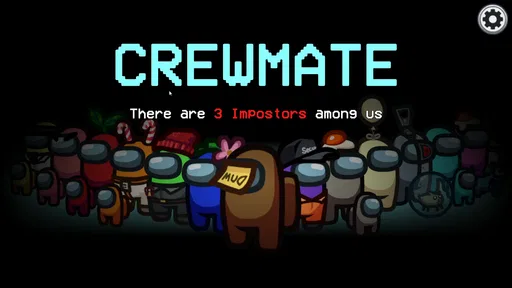
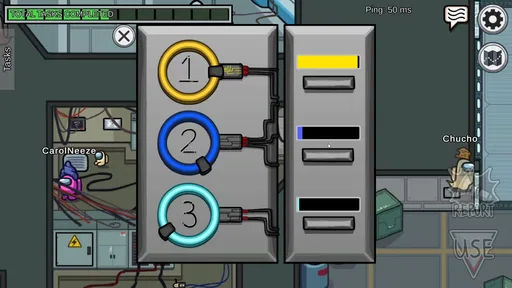
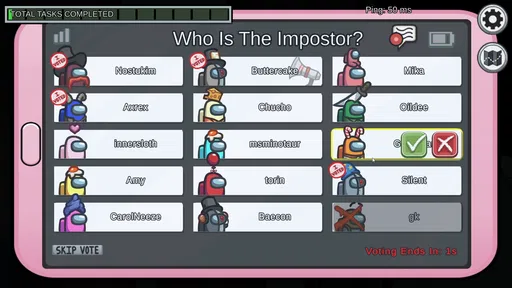
Our Review of Among Us
 Analysis by Appyee
I reach for Among Us when I want a game night to become a lively guessing game rather than a quiet solo session. It is an action game from Innersloth LLC, built around short multiplayer rounds in which teamwork matters, but trusting the wrong person can undo it. The setup is easy to grasp; the fun comes from watching people interpret the same events in completely different ways.
Your first move sets the tone
A round begins with a practical choice: focus on your crewmate duties, or, if you are assigned the impostor role, work out how to disrupt the group without drawing suspicion. That split gives familiar actions a social edge. As a crewmate, I try to keep moving while noticing who is nearby and whether their account of events makes sense. As an impostor, I have to think about what other players can see and how my explanation will sound when everyone compares notes.
That makes it a good fit for friends who can talk while they play, whether they are sitting together or joining from separate places. It can also work for a casual get-together: one person can explain the basic roles, then the group learns the rhythm by playing. I would not pick it for someone who wants a fully scripted story, precise combat, or a satisfying solo campaign. The pleasure is in people reacting to one another, so a quiet group or a player who dislikes social deduction may find the rounds thin.
How the round builds tension
The action-and-feedback rhythm is unusually clear. I do a task, move through the ship, spot something odd, and then have to decide whether it is worth raising during a meeting. A report or accusation changes the pace immediately: routine movement gives way to questions, competing explanations, and a vote. That sharp shift is the game’s strongest tool. Even a small detail—who was in a corridor, who arrived late, or who seems to know too much—can become the focus of a whole discussion.
One useful habit is to remember locations and timing rather than trying to memorize every player’s words. A simple mental note such as “I saw two people near that area” gives you something concrete to ask about later. It also helps to keep accusations specific. Asking where someone was or what they were doing is more productive than calling a player suspicious with no reason. This does not guarantee a correct vote, but it gives the meeting more substance and makes it easier for quieter players to join in.
The meetings are also where the game’s social limitations show. A confident player can dominate the conversation, while a new player may struggle to explain their route quickly. If your group tends to take teasing personally, the impostor premise can turn playful suspicion into real annoyance. I recommend agreeing that accusations stay in the game and that nobody gets mocked for a mistaken vote. The game is at its best when people enjoy the bluffing, not when they treat every round as a test of friendship.
Small choices that improve a session
For a first session, I would avoid making the rules discussion longer than the game itself. Explain the two roles, how tasks and meetings fit together, and let people learn the rest through play. After a round, ask what confused anyone before starting again. This is especially helpful when a group includes players who have never tried social deduction; they can understand the loop by seeing how an ordinary task can sit alongside a growing suspicion.
It is also worth choosing your group with the conversation in mind. A familiar circle is often the easiest place to learn because people already know one another’s speaking styles, but that familiarity can make bluffs either more entertaining or easier to spot. With strangers, the unpredictability can be refreshing, though the experience depends more heavily on whether people communicate clearly and keep the tone friendly. If you mainly want a dependable game for one person at a time, or dislike waiting while other players discuss a vote, a solo action game is a better match.
Compared with the usual action games, this is less about reflexes and direct combat than reading behavior and making a case. Compared with a board-game-style mystery, it asks players to act and respond in real time rather than taking turns through a fixed set of clues. That makes it easy to replay with a different group, but it also means the quality of a session depends on the people in it. A strong group can turn a simple round into a memorable story; a distracted one can make the same structure feel repetitive.
The Gameplay Experience
Jumping into Among Us is like diving straight into a mystery novel, but with way more chaos and laughter. You start as either a crewmate or an impostor. As a crewmate, your job is to complete tasks around the spaceship while keeping an eye out for anything suspicious. If you’re assigned as an impostor, your mission is a bit more sinister: sabotage the ship and eliminate the crew without getting caught.
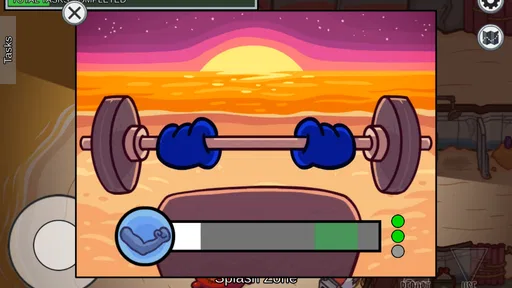
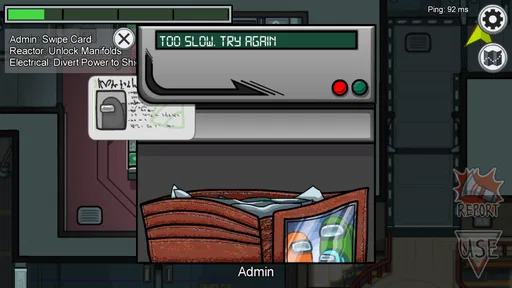
The tasks are simple but engaging, ranging from fixing wires to fueling engines. It's hilarious how quickly mundane activities become tense when you know an impostor might be lurking. And trust me, the moment someone yells “emergency meeting,” your heart skips a beat. Accusations fly, alibis are given, and more often than not, an innocent crewmate gets ejected into the void.
Graphics and Sound
The graphics are pretty basic, but that’s part of the charm. The colorful, cartoony design makes it accessible and easy to play for everyone, regardless of age. Plus, the simplistic design ensures that the game runs smoothly on pretty much any device.
Now, the sound effects? They do an excellent job of building tension. The silence when you’re sneaking around as an impostor is palpable, and the sudden alarms during emergencies are enough to make you jump. The sound design is subtle but effective in making you feel on edge.
What Makes It So Addictive?
Honestly, the social aspect is what keeps me coming back. Whether you’re playing with friends or hopping into a game with strangers, every round is different. The conversations during meetings are unpredictable, full of accusations and laughter. It’s one of those games that’s just as fun to watch as it is to play, thanks to the drama and suspense.
Also, the game’s simplicity means it’s easy to pick up and play, but the strategy involved keeps it challenging. You find yourself constantly trying new tactics and debating whether someone’s looking shifty or just doing their tasks.
Graphics, expectations, and access
The uncluttered presentation is useful on a small screen: the characters and movement are easy to follow, and the visual style does not depend on realistic detail to communicate what is happening. I would not choose it for elaborate animation or a cinematic atmosphere, though. Its look supports the social game rather than competing with it, and the tension mostly comes from what players say and do.
It is free to play, with in-app purchases listed from $0.99 to $24.99 per item. I would treat those purchases as optional extras rather than a reason to start; the central appeal is the role-based round and the conversation around it. The game is rated Everyone 10+, which is worth keeping in mind if younger players will be in the group. A rating does not guarantee that every public conversation will suit every family, so playing with people you know can make the tone easier to manage.
The game first arrived on June 15, 2018, and its current version is 2025.12.11. It requires Android 6.0 or later. It has an average rating of 3.9 from around 14 million ratings, alongside roughly 526,000 reviews and over 500 million installs. Those figures show how widely it has reached, but they do not tell you whether your own group will click with it; the social mix matters more than popularity.
When a quick round becomes a routine
A realistic use case is a short break when friends are already chatting: someone suggests a round, everyone joins, and the group gets a shared activity without needing to plan a long campaign. The reset after a vote or the end of a round is part of the appeal. Players can immediately rethink their approach, trade stories about a close call, and try again with a different role. That quick restart is rewarding when the group is engaged, but it can feel like dead time if people drop out or the conversation stalls.
One trade-off is that the game’s best moments are not fully under your control. You can play thoughtfully and still be voted out because the group misreads a clue; you can also make a clever case and find that nobody is listening. I see that unpredictability as the point, but it is not the same satisfaction as improving a personal score or mastering a fixed challenge. If you need every session to feel fair and measurable, a competitive action game with clearer individual performance may suit you better.
For a smoother first evening, I suggest starting with a group that is willing to explain decisions after a round. That small pause turns a confusing loss into a lesson: perhaps you gave too much detail, missed an opportunity to ask a direct question, or focused on a hunch instead of the route players took. Over time, the most useful skill is not elaborate deception; it is paying attention and communicating clearly without turning the meeting into an argument.
What Makes It So Addictive?
Honestly, the social aspect is what keeps me coming back. Whether you’re playing with friends or hopping into a game with strangers, every round is different. The conversations during meetings are unpredictable, full of accusations and laughter. It’s one of those games that’s just as fun to watch as it is to play, thanks to the drama and suspense.
Also, the game’s simplicity means it’s easy to pick up and play, but the strategy involved keeps it challenging. You find yourself constantly trying new tactics and debating whether someone’s looking shifty or just doing their tasks.
Final Thoughts
If you’re looking for a game that’s a mix of strategy, fun, and a bit of chaos, Among Us is a must-try. It's perfect for a quick game session or an all-night gaming marathon with friends. Just be prepared for some heated debates and lots of laughter. Who knew that being suspicious of your friends could be this much fun?
So, gather your crew, trust no one, and dive into the world of Among Us. You might just find yourself hooked on the mystery and mayhem!
Privacy and Permissions
See what permissions an app requests and how it handles your data.
- Other
- view network connections, allow Wi-Fi Multicast reception, full network access, run at startup, prevent device from sleeping
Verdict
Strengths of Among Us
- Engaging multiplayer experience
- Unique social interaction dynamics
- Customizable characters
- Regular updates and new content
- Cross-platform play enabled
Limitations of Among Us
- Can be repetitive over time
- Occasional server issues
- Toxicity in chat at times
- Requires internet connection
- Limited solo play options
Similar Picks in This Category
View All
Temple Run 2: Endless Escape
Imangi Studios4.1

PUBG MOBILE
Level Infinite4.3

Free Fire: 9th Anniversary
GARENA INTERNATIONAL I4.4

Talking Tom: Hero Dash Run
Outfit7 Limited4.3

slither.io
Lowtech Studios3.9

Sniper 3D:Gun Shooting Games
Wildlife Studios4.6
You May Also Like
View All


Frequently Asked Questions
What is the main objective of Among Us?
In Among Us, players are tasked with completing various tasks around a spaceship while trying to identify the Impostors among them. Impostors aim to eliminate Crewmates and sabotage their efforts without getting caught. The game revolves around teamwork, strategy, and deception, making it a thrilling experience for players of all ages.
Can I play Among Us with friends, and how many players are supported?
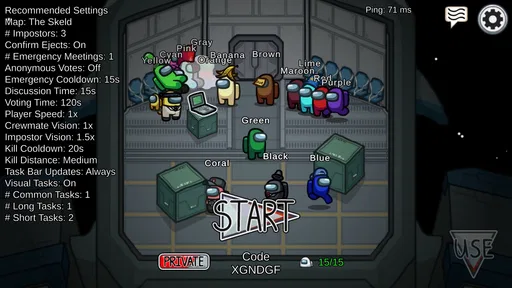
Yes, you can play Among Us with friends by creating or joining a private game room. The game supports 4 to 15 players in a single session. Playing with a larger group enhances the excitement and complexity of identifying Impostors, making it more engaging and challenging for everyone involved.
Is it necessary to have an internet connection to play Among Us?
Among Us requires an internet connection for online multiplayer sessions. However, you can play locally with friends using the same Wi-Fi network, which does not require internet access. This flexibility allows players to enjoy the game in different settings, accommodating various connectivity situations.
How does the chat system work in Among Us?
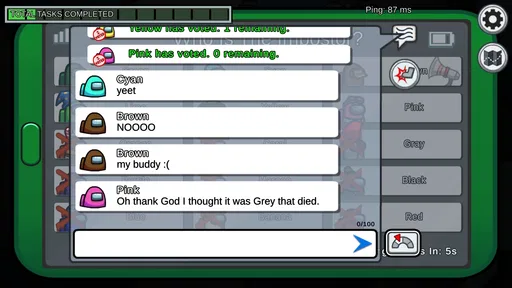
Among Us includes a chat system that allows players to communicate during meetings and discussions. Players can use the text chat to share suspicions, defend themselves, or strategize. Recent updates also introduced Quick Chat, which provides preset phrases for faster communication, especially useful on mobile devices.
Are there any in-app purchases in Among Us?
Yes, Among Us offers in-app purchases, mainly cosmetic items like skins, hats, and pets. These purchases do not impact gameplay but allow players to personalize their in-game characters. The game remains free-to-play, and purchasing items is entirely optional, ensuring fairness and accessibility for all players.
Play our best games!


